
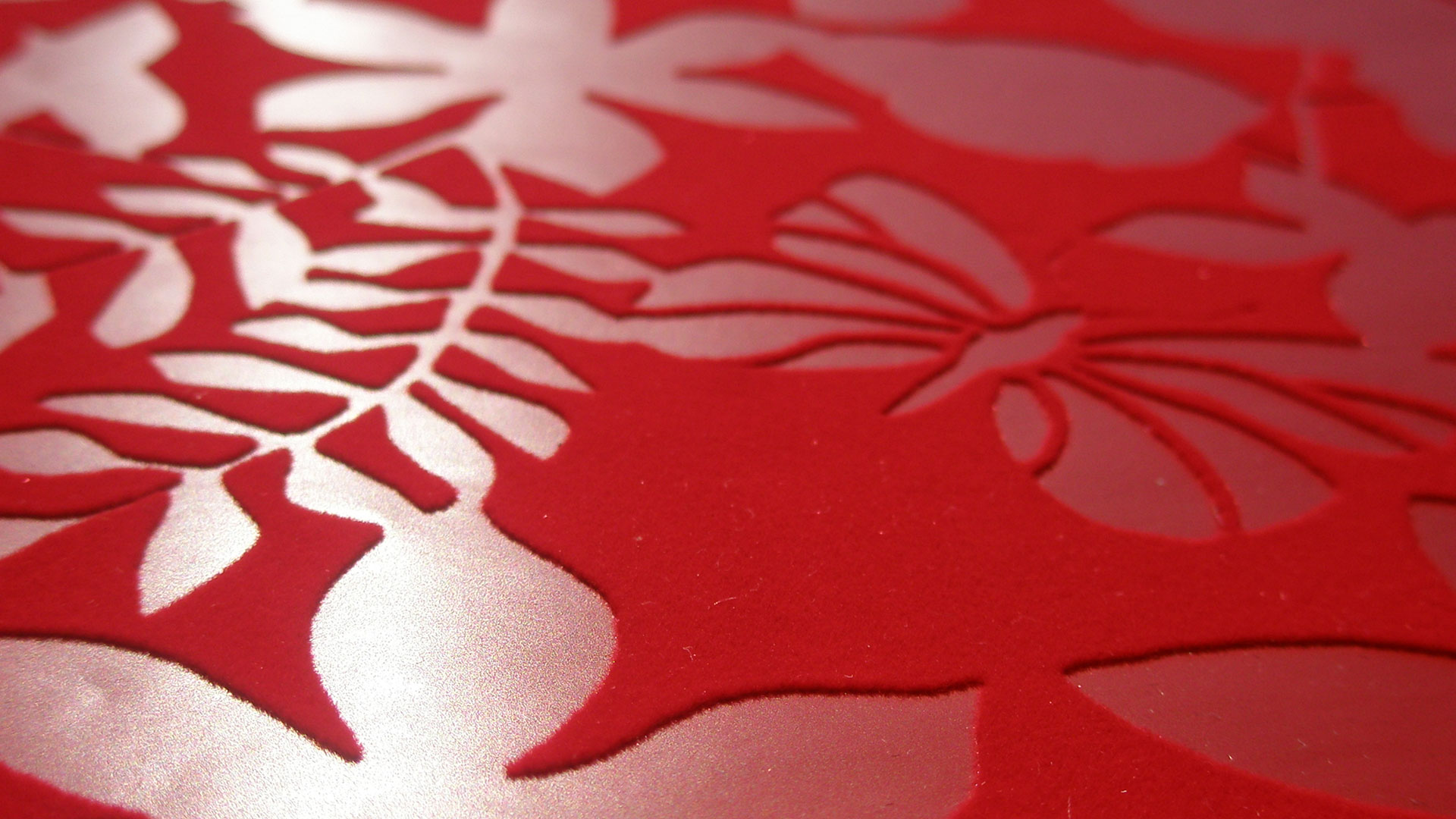
Answer: Tiny fibers!
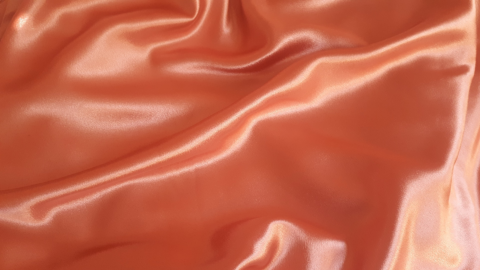
Flocking deposits many small fiber particles – called “flock” – onto a slightly adhesive surface. These fibers create the raised, velvety look and feel we love so much.
Naturally this means that flocking is not just another visual effect. It actually changes how the piece feels, which can make a card, package, or promotional piece that much harder to let go of.
Whether you’re going for a bright and cheerful effect, or for a more classic tone-on-tone one, this printing technique definitely makes an outstanding first impression. (And before you ask, the flock will not come off, no matter how hard you rub.)
PaperSpecs PRO Members, for more on this don’t miss our:






Is it the same process as my 100 year old wallpaper?
Great question! While we’re afraid we’re not as familiar with the making of century-old wallpaper as we should be, we have to think it can’t be all that different. Anyone else have thoughts on this?
I think you are referring to Lincrusta wall covering.
From Wikipedia:
Lincrusta is made from a paste of gelled linseed oil and wood flour spread onto a paper base. It is then rolled between steel rollers, one of which has a pattern embossed upon it. The linseed gel continues to dry for many years, so the surface gets harder over time.
Fascinating! Thank you, Joy!